



Stephanie Clarke
Stephanie Clarke is Professor Emeritus at the Faculty of Biology and Medicine in Lausanne, where she was Head of the Neuropsychology and Neurorehabilitation Clinic at the University Hospital. Her research focus is cognition and functional organisation of the human cerebral cortex, with particular interest in the plasticity of the human auditory cortex. Stephanie Clarke is Honorary Member of the World Federation of Neurorehabilitation, the Swiss Academy of Medical Sciences and the Swiss Society for Neuroscience. She is Fellow of the European Academy of Neurology and of the Royal Society of Medicine (UK).

Sabahat Asim Wasti
Dr. Sabahat Wasti is an internationally recognized consultant in Physical Medicine & Rehabilitation and the Head of Neurorehabilitation at the Neurological Institute, Cleveland Clinic Abu Dhabi. With over 30 years of experience spanning the United Kingdom and the United Arab Emirates, he has led the development of advanced neurorehabilitation programs, integrating clinical excellence with research and innovation.
Dr. Wasti serves as Regional Vice President of the World Federation of Neurorehabilitation (Gulf Region) and Co-chairs both the Community Based Rehabilitation and Service Development and Neurophilosophy Ethics Special Interest Groups. He has contributed extensively to clinical governance, ethical oversight, and vocational rehabilitation initiatives, mentoring healthcare professionals and supervising PhD candidates.
His research focuses on stroke rehabilitation, Service structure and culturally adapted rehabilitation models. He has authored numerous publications and is involved in cutting-edge bioengineering projects aimed at improving functional outcomes for patients with neurological conditions.
Renowned for his leadership and advocacy, Dr. Wasti combines deep clinical expertise with a patient-centered approach, driving innovations that enhance recovery, quality of life, and the integration of neuroscience and technology into modern rehabilitation practice.
Volker Hömberg
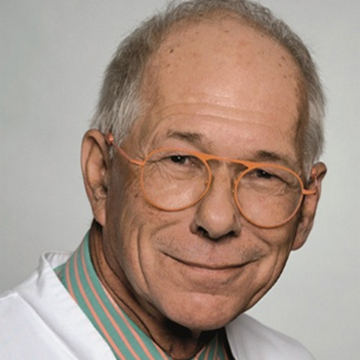
Prof. Volker Hömberg received his medical education in Düsseldorf, Freiburg and Boston, followed by specialist training and research in neurology. He has founded and led several neurological therapy and rehabilitation centres in Germany and internationally.
He served as Secretary General of the WFNR for over 15 years and is now its President.
He has published more than 250 peer-reviewed articles, as well as numerous books and book chapters. His research interests include motor and cognitive rehabilitation, neurological music therapy and pharmacology in neurorehabilitation.

Steven C. Cramer
Steven C. Cramer, MD, MMSc
Dr. Steven C. Cramer is a Professor of Neurology and the Susan and David Wilstein Chair in Rehabilitation Medicine at the University of California, Los Angeles. He is also the Medical Director of Research at California Rehabilitation Institute. Dr. Cramer graduated with Highest Honors from University of California, Berkeley; received his medical degree from University of Southern California; did a residency in internal medicine at UCLA; and did a residency in neurology plus a fellowship in cerebrovascular disease at Massachusetts General Hospital. He also earned a Masters Degree in Clinical Investigation from Harvard Medical School.

Friedhelm Hummel
Prof. Dr. Friedhelm Hummel is a neurologist and leading translational neuroscientist in the field of neurorehabilitation and interventional neurotechnology. Since 2016, he has been Full Professor at the Swiss Federal Institute of Technology Lausanne (EPFL) and Adjunct Professor at the University Hospitals of Geneva.
His work is dedicated to developing next-generation neurotechnologies to improve motor and cognitive function and to foster recovery after stroke, traumatic brain injury, and neurodegenerative disorders. A major focus of his research is the establishment of orchestrated non-invasive neuromodulation in humans, including multifocal and deep-brain stimulation approaches, alongside network-based biomarkers to predict recovery and treatment response. His research bridges fundamental systems neuroscience and clinical application, with the overarching goal of enabling personalized, circuit-based therapies for neurological disease.
Dafin Muresanu
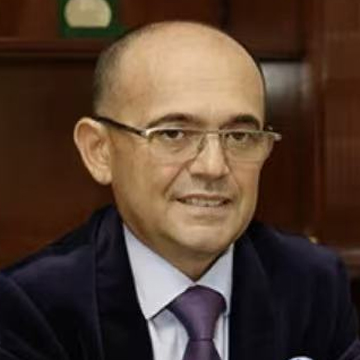
Professor of Neurology, Senior Neurologist, Chairman of the Neurosciences Department, Faculty of Medicine, Iuliu Hatieganu University of Medicine and Pharmacy Cluj-Napoca, President of the European Federation of Neurorehabilitation Societies (EFNR), Secretary-General of the Academy for Multidisciplinary Neurotraumatology (AMN), Co-chair Neurorehabilitation Panel of the European Academy of Neurology (EAN), President-Elect of the Romanian Society of Neurology, President of the Society for the Study of Neuroprotection and Neuroplasticity (SSNN), Chairman “RoNeuro” Institute for Neurological Research and Diagnostic, Corresponding Member of the Romanian Academy, Member of the Academy of Medical Sciences, Romania and secretary of its Cluj Branch. He is member of 17 scientific international societies and 10 national ones, being part of the executive board of most of these societies. Professor Dafin F. Muresanu is also a specialist in Leadership and Management of Research and Health Care Systems (MBA – Master of Business Administration - ‘Health Care Systems Management’, The Danube University - Krems, Austria, 2003). He has performed valuable scientific research in high interest fields such as: neurobiology of central nervous system (CNS) lesion mechanisms; neurobiology of neuroprotection and neuroregeneration of CNS; the role of the Blood-brain barrier (BBB) in CNS diseases; developing comorbidities in animal models to be used in testing therapeutic paradigms; nanoparticles neurotoxicity upon CNS; the role of nanoparticles in enhancing the transportation of pharmacological therapeutic agents through the BBB; cerebral vascular diseases; neurodegenerative pathology; traumatic brain injury; neurorehabilitation of the central and peripheral nervous system; clarifying and thoroughgoing study on the classic concepts of Neurotrophicity, Neuroprotection, Neuroplasticity and Neurogenesis by bringing up the Endogenous Defense Activity (EDA) concept, as a continuous nonlinear process, that integrates the four aforementioned concepts, in a biological inseparable manner.
Professor Dafin F. Muresanu is coordinator in international educational programs of European Master (i.e., European Master in Stroke Medicine, University of Krems), organizer and co-organizer of many educational projects: European and international schools and courses (International School of Neurology, European Stroke Organisation Summer School, Danubian Neurological Society Teaching Courses, Seminars - Department of Neurosciences, European Teaching Courses on Neurorehabilitation) and scientific events: congresses, conferences, symposia (International Congresses of the Society for the Study of Neuroprotection and Neuroplasticity (SSNN), International Association of Neurorestoratology (IANR) & Global College for Neuroprotection and Neuroregeneration (GCNN) Conferences, Vascular Dementia Congresses (VaD), World Congresses on Controversies in Neurology (CONy), Danube Society Neurology Congresses, World Academy for Multidisciplinary Neurotraumatology (AMN) Congresses, Congresses of European Society for Clinical Neuropharmacology, European Congresses of Neurorehabilitation). His activity includes involvement in many national and international clinical studies and research projects, over 600 scientific participations as invited speaker in national and international scientific events, a significant portfolio of scientific articles (over 300 papers indexed on Web of Science-ISI Core Collection, H-index: 34) as well as contributions in monographs and books published by prestigious international publishing houses. Prof. Dr. Dafin F. Muresanu has been honoured with: Romanian Academy, ”Iuliu Hatieganu Award”, for the contribution to the second edition of the book: ”Repercusiuni miocardice şi coronariene în boli cronice (Miocardic and Coronarian Repercusions in Chronical Diseases)” in 2024; Iuliu Hatieganu University of Medicine and Pharmacy Cluj-Napoca,”Social Responsibility Award” in 2024; „Dimitrie Cantemir” Medal of the Academy of The Republic of Moldova in 2018, Ana Aslan Award 2018 - “Performance in the study of active aging and neuroscience”, for the contribution to the development of Romanian medicine, National Order “Faithful Service” awarded by the President of Romania in 2017; Iuliu Hatieganu University of Medicine and Pharmacy Cluj-Napoca, “Iuliu Hatieganu Great Award 2016” for the best educational project in the last five years; the Academy of Romanian Scientists, “Carol Davila Award for Medical Sciences / 2011”, for the contribution to the Neurosurgery book “Tratat de Neurochirurgie” (vol.2), Editura Medicala, Bucuresti, 2011; Iuliu Hatieganu University of Medicine and Pharmacy Cluj-Napoca “Octavian Fodor Award” for the best scientific activity of the year 2010 and the 2009 Romanian Academy “Gheorghe Marinescu Award” for advanced contributions in Neuroprotection and Neuroplasticity. In May 2025, Prof. Dr. Dafin F. Muresanu was conferred the honorary membership of the Society of Neurologists of the Republic of Moldova in recognition of exceptional contribution to advancing academic and professional dialogue in the field of neurology. Also, in June 2025, he was conferred the “Service Award” of the European Academy of Neurology (EAN) in recognition for his contribution in his capacity as board member of EAN.

Nam-Jong Paik
Nam-Jong Paik, M.D., Ph.D., is a Professor of Rehabilitation Medicine at Seoul National University College of Medicine. As a world-renowned expert in neurorehabilitation, he is the incoming President of the World Federation for NeuroRehabilitation (WFNR). His research focuses on advancing functional recovery through brain plasticity, pioneering the clinical application of neuromodulation (TMS, tDCS), brain-computer interfaces (BCI), and digital health platforms. With an H-index of 57, Professor Paik has significantly influenced precision neurorehabilitation for stroke and neurological disorders, earning prestigious accolades such as the Seok-Jeon Lifetime Achievement Award.

Eiichi Saitoh
Dr Saitoh is a board-certified physiatrist, Professor Emeritus, Senior advisor of Fujita Health University, Japan. He served as the chair of the Department of Rehabilitation Medicine at Fujita Health University from 1995 to 2019.
He is the President of Japanese Society for Neural Repair and Neurorehabilitation and the chair of Asian Dysphagia Society.
He holds adjunct/visiting professorships at several universities, including Johns Hopkins University (USA), University of Health and Rehabilitation Sciences (China), and Kyoto Prefectural University of Medicine (Japan). He was selected as an International member of National Academy of Medicine (USA, 2020-).
His research areas are dysphagia, activity assistive technologies, motion analysis, and psychology.

Urvashi Shah
Dr Urvashi Shah, Ph.D., holds dual degrees in occupational therapy and clinical psychology. Over thirty years ago, she started the first multidisciplinary, neurorehabilitation clinic in a public hospital in western India. Her pioneering work in developing neurorehabilitation for low income groups has won her national recognition and the Mayor’s Achievement Award.
She is Co-Chair of the International League Against Epilepsy Neuropsychology Task Force and Founder Member of the Indian Federation of Neurorehabilitation (IFNR ).
She is convener of cognitive rehabilitation workshops and neurodisability public awareness programs at the IFNR and Neurological Society of India conferences. She was a keynote speaker at the annual meetings of the International Neuropsychology Society and the British Psychology Society and has authored chapters on neurorehabilitation in resource limited settings.

Surjo Soekadar
Surjo R. Soekadar, MD, is Chief Innovation Officer and Einstein Professor of Clinical Neurotechnology at Charité – Universitätsmedizin Berlin. His work focuses on translational neurotechnology, including brain-computer interfaces (BCIs), AI-informed neuromodulation, and non-invasive approaches to restore motor and cognitive function in patients with neurological and psychiatric disorders. He pioneered methods enabling neural control of assistive devices such as exoskeletons and develops adaptive neurostimulation strategies for bidirectional BCIs. His research integrates neuroscience, engineering, artificial intelligence, and ethics to advance personalized neurorehabilitation and clinically scalable neurotechnology solutions. His work is supported by major national and international funding agencies, including the European Research Council (ERC).

Steven Zeiler
Dr. Steven Zeiler cares for patients with stroke. He received his Medical and Doctor of Philosophy degrees from the University of Colorado. He completed a one-year internal medicine internship at the University of Colorado prior to coming to Johns Hopkins for his residency training in Neurology and fellowship training in Vascular Neurology. As a stroke provider, Dr. Zeiler has first-hand knowledge of stroke, stroke treatment, and stroke recovery, all of which inform his research. Dr. Zeiler’s laboratory uses cutting-edge molecular, genetic, and behavioral techniques in animals with translational investigations in humans. Working in collaboration with neuroscientists, engineers, computer programmers, and therapists, Dr. Zeiler has developed digital monitoring and digital therapeutic solutions for patients with stroke. Dr. Zeiler directs SENRG: Super Room for Enriched Neurological Repair at Green Spring.

 loading......